
What Full-Stack Introspection Really Means
The Blind Spots of Modern Observability
During the last decade, we’ve become exceptionally good at generating telemetry. Logs, metrics, spans, flame graphs and distributed traces have helped engineers understand systems that would otherwise be unmanageable. Yet even with these tools, critical behaviours still occur in places where conventional observability has no reach.
A system may appear healthy on dashboards while subtle timing anomalies accumulate at the scheduler level. An application may produce clean logs while a resource-contention issue unfolds beneath the runtime. Between a syscall and the packet that eventually leaves a network interface, layers of logic can mutate the original intent, introduce non-deterministic latency, or change priority decisions in ways invisible to traditional tooling. These are the regions where modern infrastructures still behave like opaque black boxes.
True introspection begins where monitoring stops, at the boundary where high-level semantics collapse into low-level execution paths. It doesn’t aim to replace dashboards, but to extend vision into the mechanisms that produce those dashboards in the first place.
From Black Boxes to Transparent Systems
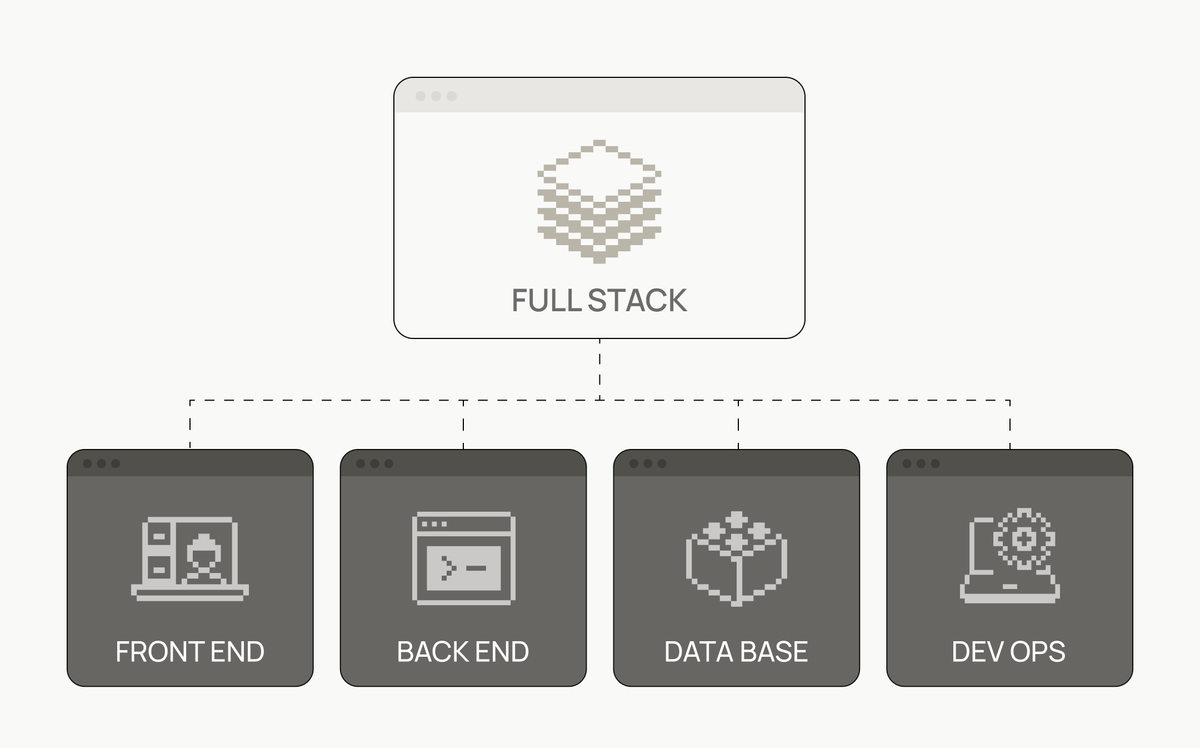
Full-stack introspection assumes that every layer (kernel, runtime, libraries, containers, orchestration engines and the application itself) participates in a single continuous flow of events.
Kernel probes and eBPF hooks reveal how the system handles threads, memory and I/O. Runtime telemetry exposes how languages schedule work and allocate resources. Service-level signals add context by showing user-level behaviour and performance perception. When combined, these sources produce a unified event graph that describes not just what happened, but how each layer contributed to the outcome.
This approach changes the nature of debugging. Instead of staring at symptoms (like a peak in CPU usage or a stalled queue) you can follow the causal chain backward to the syscall that triggered the cascade. A memory leak no longer manifests as an abstract slowdown: you can watch its origin, trace how allocators attempted to compensate, observe how GC cycles or thread schedulers reacted, and finally see how the ripple surfaced at API level.
Building a Unified Observation Plane
Modern infrastructure is inherently fragmented. Languages with their own runtimes coexist with sandboxed environments, kernel-level protections, hypervisors, and distributed orchestration layers. Each of these layers emits data using different formats, assumptions and semantics. The challenge is not collecting this data but understanding what the data means when examined together.
A unified observation plane requires more than aggregation. It demands normalisation: a way to represent heterogeneous events using a shared semantic model so they can be correlated without losing the meaning of the original signal. Lightweight agents and in-kernel telemetry pipelines gather events at their source, enrich them with contextual metadata (timestamps, thread identifiers, resource lineage), and emit them as components of the same timeline rather than independent streams.
Once these timelines merge, cross-domain analysis becomes natural. A latency spike can be mapped to a specific contention on a kernel lock. A stalled service can be tied to a runtime allocator degrading under fragmentation pressure. A network anomaly can be linked to a scheduler decision taken milliseconds earlier.
The Growing Importance of Temporal Precision
As systems become more concurrent and distributed, time itself becomes the ultimate source of truth. When hundreds of micro-decisions occur every millisecond, understanding the ordering of events matters more than their aggregate values.
Full-stack introspection treats time as a first-class element. It preserves microsecond resolution even when signals originate at different layers. Without this temporal precision, root-cause analysis becomes probabilistic; with it, it becomes deterministic.
This is what enables engineers to move from “it seems like X causes Y” to “here is the exact point where X triggered Y.”
Conclusion
Full-stack introspection bridges the gap between the abstractions engineers work with and the mechanisms their systems actually execute. It replaces reactive debugging with proactive understanding. And more importantly, it lets teams observe not just the symptoms of failure, but the physics of failure itself.